Showing posts with label raisins. Show all posts

♥︎Quick muesli bread

For ➓ portions
50 g oatmeal flakes
2 tbs oatmeal flakes for decoration
30 cl (oat) milk
240 g spelt flour
1½ ts baking powder
1 ts cinnamon
3 tbs honey or apple syrup
1 egg, beaten
125 g currants and/or raisins
50 g dried apricots
5 tbs coarsely chopped almonds (or several types of nuts)
a ​​little bit of butter for the tin
bread / cake tin 9 x 21cm

Put the oatmeal in a bowl and pour the milk over it and let it rest for 30 m.
Preheat the oven to 180°C.
Grease a cake tin with a little butter and place a small sheet of baking paper on the bottom.
After 30 m, add all the other ingredients to the bowl.
Stir everything together with a fork or mix in a food processor on low speed. Add the dry ingredients last and mix for another 30 s.
Spoon the mixture into the tin and smooth the top and sprinkle with 2 tbsp oatmeal.
Bake the muesli bread for 45 m or until well done and brown on top.
Let the bread cool slightly in the tin, then turn the bread out onto a rack, remove the baking paper and let the bread cool completely.
Keeps for 4-5 days.


Couscous with halloumi & fried red pepper

For ➍
4 red peppers, cut into strips
335 g whole grain couscous
40 g raisins
40 g almonds, roughly chopped
2 cloves of garlic, pressed or finely chopped
20 sprigs fresh cilantro, finely chopped
2 limes
250 g halloumi, cut into 1-2 cm cubes
125 g fat yogurt
70 cl vegetable stock
3 tbs olive oil
4 tbs extra virgin olive oil
pepper & salt

Grate the zest of the lime. Squeeze the lime.
In a salad bowl, mix the couscous and raisins with the stock and allow to soak, covered, for 10 m. Then stir with a fork.
Heat ½ of the olive oil in a frying pan over a medium heat and fry the pepper strips 7 - 9 m. Season with salt and pepper.
Meanwhile, heat the remaining olive oil in another frying pan over medium heat and fry the lime zest and garlic for 30 s.
Add the cubes of halloumi, fry for 3 - 4 m until crispy. Then remove them from the pan.
Fry the soaked couscous 1 - 2 m in the same pan in the lime-garlic oil.
Mix the coriander with the couscous and season with the extra virgin olive oil, pepper and salt.
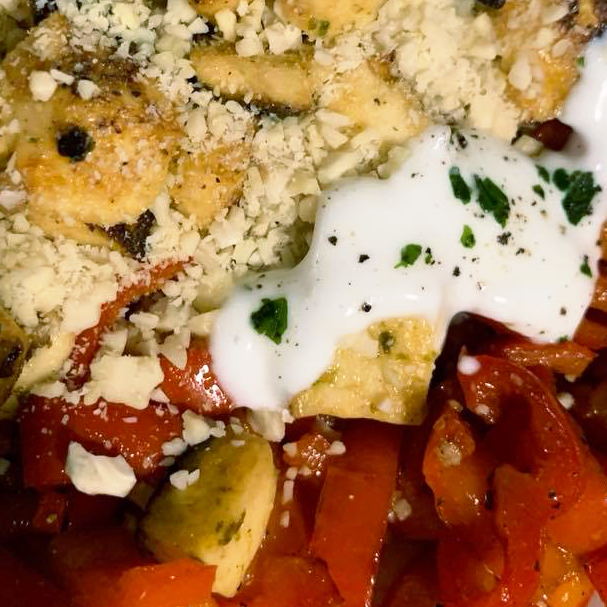
Divide the couscous over the plates and scoop the bell pepper strips on the side. Drizzle the couscous with the lime juice and garnish with the halloumi and almonds. Serve the yogurt separately, so that everyone can add it to their own taste.

Strudel di mele
(apple strudel)

For ➍-➏
 for the dough:*
150 g flour 
a pinch of salt 
2-3 tbs granulated sugar 
1 egg 
2-3 tbs olive or vegetable oil (or melted butter) 
water
for the filling:
750 g (1-2) apples 
75 g granulated sugar
handful of raisins, pre-soaked in rum 
handful of pinoli (pine nuts), or slivered almonds 
1-2 tbs cinnamon 
75 g breadcrumbs 
a good nob of butter 
for baking and finishing: 
more flour 
melted butter 
powdered sugar 

If using homemade dough, prepare it by mixing the dry ingredients, then the egg and oil, then finally just enough water to form a ball. Knead briefly until the dough is soft and elastic. Wrap the dough in plastic wrap, then in a towel, and let rest for a good 30 m or more. 
While the dough* is resting, peel, core and slice the apples as thinly as you can. 
Add the sugar, cinnamon and raisins, drained and squeezed dry, and the pine nuts or almonds.  Mix things all together, moistening the mixture with a bit of the rum in which the raisins have been soaked. Set aside. 
Sauté the breadcrumbs in the melted butter over very gentle heat until they are lightly browned. Do not over-brown the crumbs. When the dough* has rested at least a good 30 m, mold it into a flat, rectangular shape and place it on a well-floured cotton dish towel. 
Roll the dough* out as thinly as you can manage into a large, rectangular shape. Older recipes tell you to stretch it further with your hands, as you might a thin-crust pizza.
Brush the dough* liberally with melted butter, leaving the edges dry.  Spread the sautéed breadcrumbs in a thin layer all over the dough, leaving the edges clear. 
Pour the filling over the breadcrumbs and spread it out even, again avoiding the edges. 
With the aid of the towel, roll up the dough into a large lozenge-shaped loaf. 
Once the strudel is fully rolled up, tuck the edges under and, very gently, transfer this loaf onto a baking pan or sheet. Brush the loaf liberally with melted butter. If you prefer a ‘shiny’ surface to your strudel, brush the surface with milk or egg wash instead. 
Bake the strudel in a hot (200°C) oven for a good 30-45 m, until golden brown all over. (I find it helps browning if you brush it once or twice with more melted butter while it bakes.) Let the strudel cool entirely. Top with powdered sugar before serving in thick slices, perhaps with a nice side of whipped cream or ice cream if you’re feeling decadent.

*If using store-bought pastry dough, just lay it out flat on the sheet it is usually attached to and lay the breadcrumbs and filling out on top, then roll it up as usual. You won't need to brush it with butter, as pastry dough already has a high fat content, [although brushing it with milk will help it brown]. Use puff pastry or phyllo dough, which makes a particularly delightful Strudel, lay out one sheet, brush it with melted butter, then repeat until you have 4 or 5 layers of dough, before laying on the breadcrumbs and apple filling.

Almond & banana bread

For ➓ servings
1 tbs coconut oil
3 eggs
120 g almond flour
2 ripe bananas *
1 tbs baking powder
1 tbs cinnamon
1 pinch sea salt
50 g almonds, roughly chopped
3 tbs raisins (or dried cranberries, blueberries ...)
2 tbs almond flakes

Preheat the oven to 180 ° C.
Mix the eggs with the almond flour, bananas, baking powder, cinnamon, a pinch of salt and melted coconut oil in a blender or food processor.
Drain the batter from the blender / food processor, add the nuts and raisins (or dried cranberries) and mix well with a spoon.
Grease the cake tin (or use a silicone baking tin). Put everything in the cake tin, sprinkle the almonds on top and bake about 40 m in the preheated oven. Prick the bun with a wedge to see if it is cooked. The wedge must be dry. If the bun becomes too dark, cover it with baking paper.
* Replace if necessary. 1 banana by 3 tbs apple sauce

Caponata

For ➍
2 eggplants
½ celery
2 medium onions
2 tbs pine nuts
6 tbs traditional olive oil
400 g canned tomatoes
200 g green olives stuffed with lemon
5 tbs red wine vinegar
2 tbs granulated sugar
2 tbs raisins
2 tbs capers
15 g fresh basil

Cut the aubergine into 1½ cm pieces and sprinkle with salt. Leave standing for 5 m. Pat dry with kitchen paper. 
Meanwhile, cut the green celery and chop finely. Cut the stems into thin arcs. Slice the onion in thin rings. Heat a frying pan without oil or butter and roast the pine nuts 3 m golden brown. Let cool on a plate. 
Heat half of the oil in a skillet over medium heat and fry half of the eggplant golden brown . Remove from pan and repeat with rest of oil and eggplant. Put all the eggplant together in the pan, mix with the onion and celery and bake for4 m. Add the diced tomatoes, olives, vinegar and sugar. 
Stew with the lid diagonally on the pan over low heat for 30 m until done. 
After 15 m, add the pine nuts, raisins and capers. 
To prevent sticking, toss from time to time. Season with pepper and salt if desired.
Remove from heat and toss in the basil leaves and celery greens.

* Delicious with grilled fish, or / and couscous or ciabatta.
** You can also eat this dish as a starter.
*** You can eat the salad warm, lukewarm or cold.
**** You can make this dish two days in advance, but don't add the basil until just before serving. Keep covered in the refrigerator.

Tagliatelle frisinsal (Venetian tagliatelle with roasted chicken, fennel & pine nuts)

For ➍-➏
2 fennel bulbs, with fronds attached
extra virgin olive oil
kosher salt
freshly ground black pepper
1 chicken, neck reserved if possible
3 lemons
2 stalks fresh rosemary
1 ts minced fresh rosemary leaves
40 g golden raisins
50 g pine nuts
2 glasses white wine
40 cl (plus extra) good chicken stock, preferably homemade
500 g tagliatelle or pappardelle
a good handful of flat parsley leaves if your fennel didn't have its fronds attached

Preheat the oven to 220°C.
Remove the fronds from the fennel stalks and reserve.
Trim the stalks from the fennel bulbs and reserve.
Trim the root ends from the fennel bulbs, slice the bulbs in half, slice into thin wedges*
Place the fennel in a good sized, heavy-bottomed roasting tin (stove top safe), along with the chicken neck if they’ve included it with your chicken, and toss with a generous glug of olive oil and plenty of salt and pepper.
Clear an area in the center of the pan for the chicken. Pat dry the chicken with paper towels and use a sharp knife to slice through the thigh and leg meat in 3-4 places on each side. Season the cavity generously with salt and pepper. Quarter one on the lemons and place in the cavity along with the fennel stalks and 2 stalks of rosemary. Rub the skin with olive oil and season with plenty of salt and pepper, being sure to rub some into the cuts you’ve made in the thighs and legs.
Place the pan in the center of the oven. After 15 m, reduce the heat to 180°C. Roast for 1.15 h or until the legs move freely in their joints and the juices run clear.
Meanwhile, boil some water and pour it over the raisins. Allow them to soak for 30 m.**
Place a small sauté pan over very low heat and toast the pine nuts, stirring often.
Lift the chicken from the pan and allow to rest and cool at least 15 m on a plate to catch the juices. Use a slotted spoon to lift the fennel out and reserve in a bowl. Leave the chicken neck in the pan and set it on the stove top.
Add the wine, and turn the heat to high. Allow the wine to reduce by half, using a spoon or metal spatula to help loosen the fond.
Drain the raisins and add along with the minced rosemary, along with any juices that have collected in the plate the chicken is resting on.
Then add 40 cl chicken stock. Reduce the heat to medium-low and allow to reduce by half again. Remove the chicken neck and discard. Check the seasoning with more salt and pepper. Remove from the heat and reserve.
Meanwhile, shred all of the chicken flesh and skin into bite-sized pieces. Be sure not to let any of the juices escape. Add to the juices in the pan.
Bring a large pot of water to the boil and salt generously. Add the pasta to the water and cook until just al dente and then drain.
Heat the chicken sauce in a large pan if it’s cooled. Be careful not to bubble too long and lose too much liquid. You can always top it up with more hot chicken stock if the sauce gets too dry. Meanwhile mince the fennel fronds or parsley.

When the pasta is done, add the juice of 1 lemon to the chicken, check the seasoning one more time with more salt, pepper, or lemon juice if necessary, and add the pasta to the chicken, tossing to combine. Add half the pine nuts and most of the minced herbs. Plate immediately. Garnish with the remaining pine nuts and herbs. Serve immediately.

*Thin enough to caramelize and be tossed with the pasta later.
**Alternatively, braise the chicken on stovetop until done. Remove the chickened use the same for the fennel sauce.
**The sauce can hold up to 3 days. Meat braises tend to develop better flavor overnight.

Cauliflower couscous

For ➍
½ cauliflower
1 broccoli
1 onion , finely chopped
2 garlic cloves , finely chopped
4 tbs pistachios , finely chopped
2 ts Ras el hanout
salt & pepper
4 tbs raisins
zest of 1 lemon or preserved lemon, in fine strips
1 bunch flat leaf parsley, roughly chopped
olive oil

Chop the cauliflower, broccoli, onion and garlic in a food processor. Season with Ras el hanout, salt and pepper. Toast the pistachios in a non-stick pan . Mix the broccoli cauliflower couscous, raisins, pistachios , lemon zest and parsley in a bowl.
Finish with a dash of olive oil.

*Or toast the couscous briefly in a pan with a little olive oil.
Serve as a side-dish with lamb or pork tenderloin.

Veneto sweet & sour shrimps

For ➍
4 tbs olive oil
2 onions, thinly sliced
10 cl dry white wine
250 g of prawns, thawed
40 g sultanas
5 cl white wine vinegar
40 g pine nuts

Heat 2 tbs oil in a frying pan. Fry the onion for 3 m on low heat. Add the wine. Gently cook the onion over very low heat for 30 ms with the lid on the pan. Stir frequently. Add some extra water or wine if the mixture is too dry .
Meanwhile, peel the shrimps with a sharp knife and remove the intestinal tract but leave the tail down. Pat dry and sprinkle with pepper and salt. Heat the remaining oil in a frying pan and fry the shrimps for 5 m.
Put the raisins in the onion mix and cook for 2 m. Remove the pan from the heat and stir in the vinegar. Put in a bowl and let cool for 10 m. Mix with the shrimps. Season with pepper and salt. Cover and put in the refrigerator for at least 1 h.
Heat a frying pan without oil or butter and toast the pine nuts in 3 m until golden brown.
Add the shrimps' mixture.

Serve with salad or as a snack on toasted bread. Serve with a glass of prosecco.

Asure (Noah's pudding)

For ➍
125 g barley or pearl barley (or a grain product like Ebly)
4 tbs rice
75 g sugar
1 ts vanilla extract (or 1 small package vanilla)
1 tbs custard powder (or 125 g drained chickpeas)*
water
8 dry apricots, soaked in water overnight, cut in pieces***
4 dry figs, cut in pieces***
4 tbs ½ cup raisins***
2 tbs cup walnuts, crumbled, for garnish

Boil the barley and rice in separate pans. Drain.
Mix barley, rice, chickpeas* and other ingredients*** (except walnuts), add some water**, and let cook for 30 m. Stir occasionally.

Pour into a large service bowl or individual serving bowls and let cool for 2 h.

*When using custard powder, mix it with 2 tbs of warm milk. Use Turkish asure powder instead. Adjust the sugar, as the asure powder is very sweet. Or use chickpeas to thicken.
**Any amount you see fit: the lesser, the thicker the pudding will become.
***Save some of the fruit to garnish the pudding.
This recipe is one of the oldest and best known desserts of Turkish cuisine. It is traditional to give some away to friends and family, and stems from a popular Middle East legend, echoed in the Bible. The feast is still repeated every year by the Islamic community. The recipe uses the age-old habit of making sweets with beans and cereals (instead of modern sugar) and dates back from at least the Ottoman times.
...5,000 years ago in Mesopotamia, Noah was king of the city of Shuruppak. His was a trade empire, and he built a large trading ship. At that time, there was a raging flood and rainstorm. He and his family loaded animals, grain, fruit and beer on board. The rain continued for 40 days. Afterwards there was no land in sight for 7 days. They ran out of drinking water and since the sea was salty, they had to resort to drinking beer. They eventually landed on Mount Ararat, still one of the most spectacular sights on earth, now bordering the Armenian region of Turkey, close to the Iranian border. As a celebration for their survival, Noah made a pudding out of some cereals, dried beans and fruits for his family...
The image shows an old etching of Mount Ararat and the Lake Van.

Cordero Moruno (Spanish Moorish lamb)

For ➍
1 kg lamb shoulder or leg, boneless, or 2.5 kg with bone
1 ts cinnamon
1 ts ground cumin
½ ts salt
¼ ts pepper
3-4 tbs extra virgin olive oil
2 yellow onions
2 cloves garlic
75-125 cl chicken stock
45 g (4 tbs) raisins
8 cl (5 tbs) sherry
2 tbs almonds

Pat lamb dry. Combine cinnamon, cumin, salt and pepper in a small bowl. Rub spice mixture on all sides of lamb. Set aside.
Peel and chop onions and garlic. Pour olive oil into a large heavy-bottomed frying pan and heat on medium. When oil is hot, sauté the onions and garlic until onions are translucent.
Place lamb in pan and brown on both sides. Once meat is browned, add 50-75 cl of stock to cover meat. Cover pan and reduce heat to a simmer. Cook slowly for 1 to 1.5 h. Check every 15 m, adding more liquid as necessary. When done, meat should be cooked through and tender.
While lamb is cooking, pour sherry into a small bowl and soak the raisins. Coarsely grind the almonds.
About 15 m before cooking is complete, add the sherry, raisins and almonds to the pan.
When lamb is ready, slice. Serve with sauce and white rice or couscous.